Tongue Weight Made Simple: How to Load a Trailer So It Tows Straight
What tongue weight is, why about 10-15% of trailer weight should sit on the hitch, and how to place your load so the trailer tows straight.
Read more →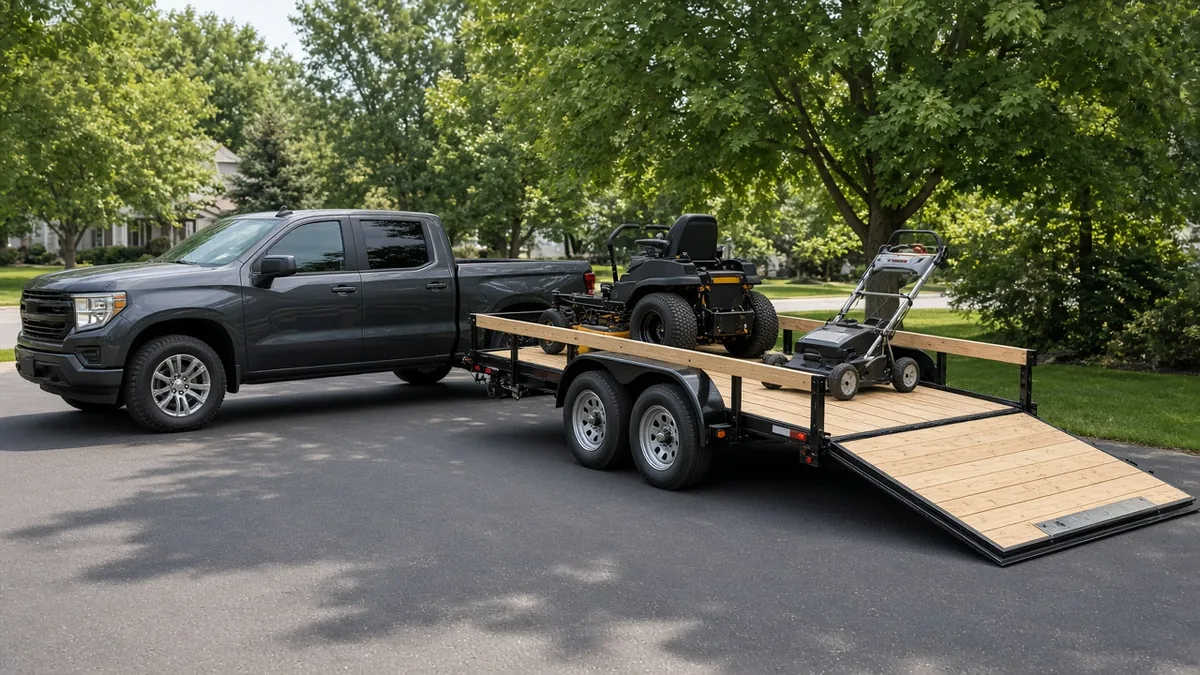
June is when landscaping season really kicks into gear around Lake Orion. Lawns need cutting every week, beds need fresh mulch, and that patio project you've been putting off finally has a free weekend. Sooner or later, the question comes up: what trailer do I actually need?
The answer depends on three things: what you're hauling, how heavy it is, and what you're towing with. Let's walk through each one.
Make a quick list of the biggest things you'll put on the trailer. For most landscaping work, it looks something like this:
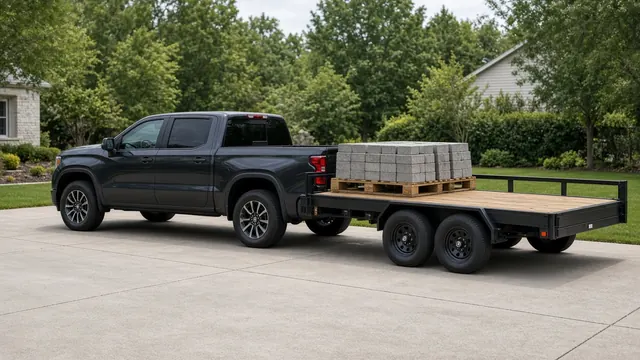
Mowers and debris take up a lot of room but don't weigh much. Stone and block are the opposite: a pallet doesn't look like much, but it can weigh more than a small car. Keep both in mind, because a trailer can run out of space or run out of weight capacity, and those are two different problems.
A short utility trailer is fine for a single push mower and a few bags of mulch. Once you add a zero-turn, a second machine, or a load of brush, you'll want more deck.
Here's a simple way to check: measure your biggest machine from front to back, add any other gear you carry on every trip, then add a couple of feet so you can walk around it and strap it down. If the total is close to the length of the trailer, size up.
Our 18 ft landscape trailer is a good example of a deck that gives you breathing room. It can carry a zero-turn plus your hand tools, or several smaller machines on one load.
Every trailer has a GVWR, or Gross Vehicle Weight Rating. That's the most the trailer is allowed to weigh fully loaded: the trailer itself plus everything on it.
To figure out how much cargo you can carry, subtract the trailer's empty weight from its GVWR. Then add up what you plan to load. Mowers usually list their weight in the owner's manual or on the manufacturer's website. For stone and block, the supplier can tell you the weight per pallet.
Heavy materials add up fast. If you're hauling pavers or wall block, check the numbers before you load, not after. Our article on towing capacity and payload walks through the math step by step.
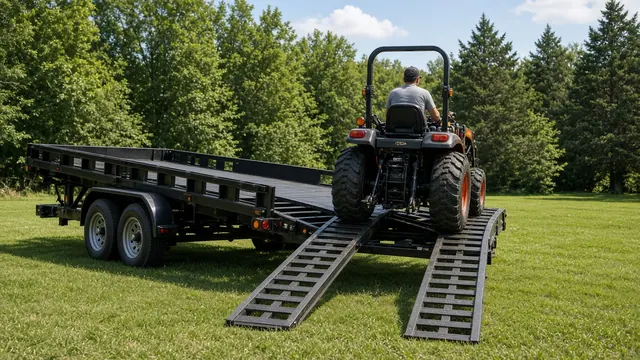
A landscape trailer usually has a rear ramp gate that folds down so you can drive or roll equipment on. A good gate makes a big difference when you're loading and unloading several times a day.
Pay attention to the loading angle, too. Low-slung mowers can scrape their decks on a steep ramp. A longer ramp or a dovetail (a short sloped section at the back of the deck) makes the angle gentler. We cover this in more detail in ramps and dovetails.
The trailer is only half the setup. Your truck or SUV needs to handle the loaded weight safely. Check these in your owner's manual or on the sticker in the driver's door jamb:
If you're close to any of those limits, think about a lighter load, more trips, or a different tow vehicle.
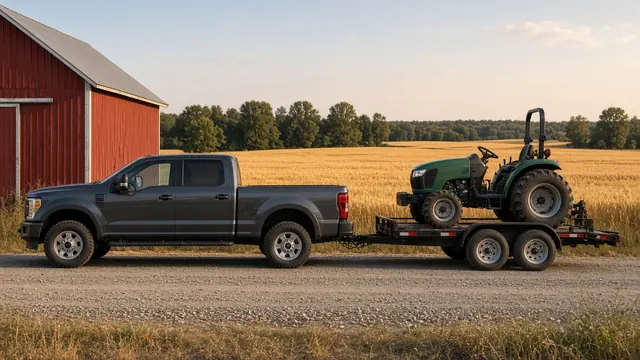
Landscaping jobs sometimes grow. If you're moving a skid steer, a compact track loader, or two machines at once, a heavier-duty flatbed may be the better fit. Our 24 ft flatbed has ramps and a 2 ft dovetail for that kind of work, but it needs a properly rated tow vehicle and a working brake controller.
Not sure which one fits your job? Our Which Trailer Do I Need? guide compares both side by side.
Answer those five, and you'll know which trailer you need. If you're still not sure, send us a message with what you're hauling and what you tow with, and we'll help you pick. Call or message for rates.
What tongue weight is, why about 10-15% of trailer weight should sit on the hitch, and how to place your load so the trailer tows straight.
Read more →GVWR, GCWR, payload, towing capacity, and tongue weight in plain English, with a step-by-step example to see if your truck can tow your load.
Read more →What a trailer dovetail is, how ramp length changes your loading angle, and how to load low mowers, side-by-sides, and equipment without scraping or slipping.
Read more →