Trailer Sway: What Causes It and How to Stop It
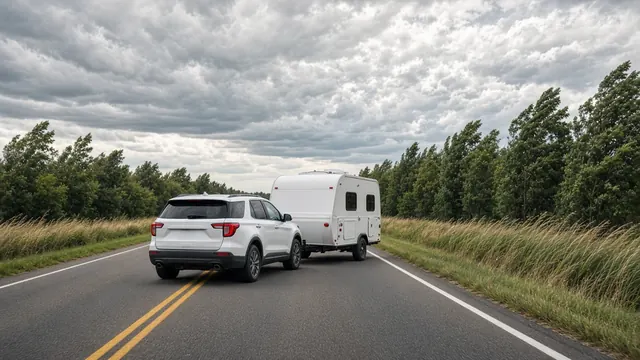
Trailer sway can turn scary fast. Learn the common causes, how to prevent it with good loading and setup, and exactly what to do if your trailer starts to sway.
Read more →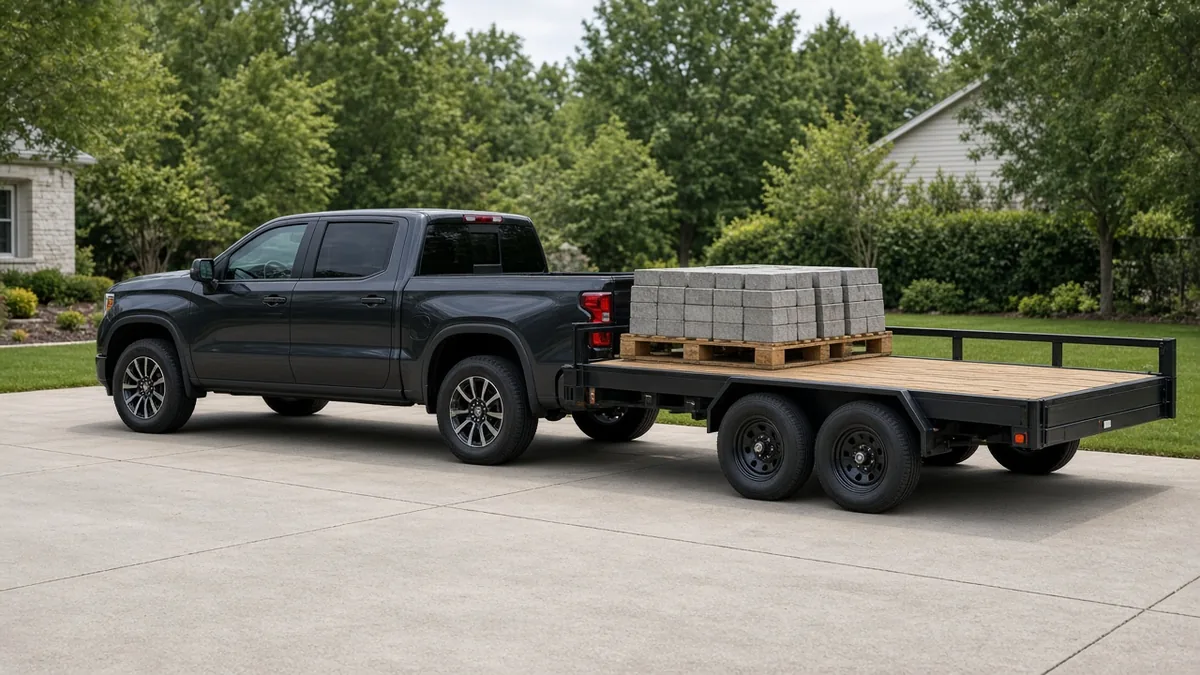
If you've ever towed a trailer that felt "squirrelly," wandering side to side or pushing the back of your truck around, there's a good chance the load was in the wrong spot. How you load a trailer matters just as much as how much you put on it. The key idea is tongue weight.
Tongue weight is the downward push the trailer's tongue puts on your hitch ball. It's not the weight of the tongue itself. It's how much of the loaded trailer's weight is resting on your tow vehicle instead of on the trailer's own axles.
A common guideline is that tongue weight should be about 10 to 15 percent of the total loaded trailer weight. So if your trailer and cargo together weigh 5,000 pounds, you'd want roughly 500 to 750 pounds pressing down on the hitch.
Too little tongue weight is the dangerous one. When there's not enough weight on the hitch, the trailer can start to sway, and sway can grow quickly at highway speed. This usually happens when the heavy part of the load is behind the trailer's axles.
Too much tongue weight causes different problems. The rear of your truck squats, the front end gets light, and steering and braking suffer. Your headlights may point up at the trees. You can also go over your hitch's or your vehicle's limits.
The goal is the middle: enough weight on the hitch to keep things stable, but not so much that it overloads the back of your vehicle.
The easiest way to get close is to put about 60 percent of the cargo weight in front of the trailer axles and about 40 percent behind them. In practice:
For a single machine like a zero-turn mower or a skid steer, that usually means positioning it so its heaviest part sits a little ahead of the axles rather than right over the ramp.
You don't need fancy gear to get a rough idea:
If your tongue weight is right but your truck is still squatting, a weight distributing hitch can help. It uses spring bars to spread some of the tongue weight forward to your vehicle's front axle and back to the trailer's axles. That levels things out and helps steering and braking.
A weight distributing hitch doesn't fix a badly loaded trailer, though. Load correctly first, then use the hitch to level. Both of our rental trailers can have a weight distributing hitch added. Just ask when you book. You can see both trailers on our Rental Fleet page.
Get the load right, and the trailer will follow you down the road like it's supposed to. If it ever does start to wander, read our guide on what to do when a trailer sways.
Trailer sway can turn scary fast. Learn the common causes, how to prevent it with good loading and setup, and exactly what to do if your trailer starts to sway.
Read more →A plain-English guide to trailer hitches covering ball sizes, receiver classes, drop and rise, ball mount ratings, and when a weight distributing hitch helps.
Read more →GVWR, GCWR, payload, towing capacity, and tongue weight in plain English, with a step-by-step example to see if your truck can tow your load.
Read more →