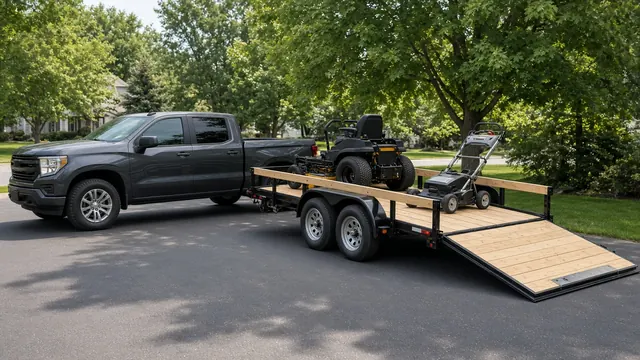
Getting equipment onto a trailer sounds simple: drop the ramps and drive up. But anyone who's scraped a mower deck, high-centered a machine at the top of the ramp, or had a ramp kick out knows it's not always that easy. The secret is the loading angle, and that's where ramps and dovetails come in.
What is loading angle?
Loading angle is how steep the ramp is from the ground up to the trailer deck. A steep angle causes problems:
Low equipment scrapes. Zero-turn mower decks, lowered lawn tractors, and some side-by-sides don't have much ground clearance.
Machines can high-center at the top of the ramp, where the ramp meets the deck.
Heavy machines can feel tippy, especially tracked machines climbing at an angle.
Traction drops. Wet ramps plus a steep angle can mean slipping.
A lower, gentler angle makes loading smoother and safer.
What is a dovetail?
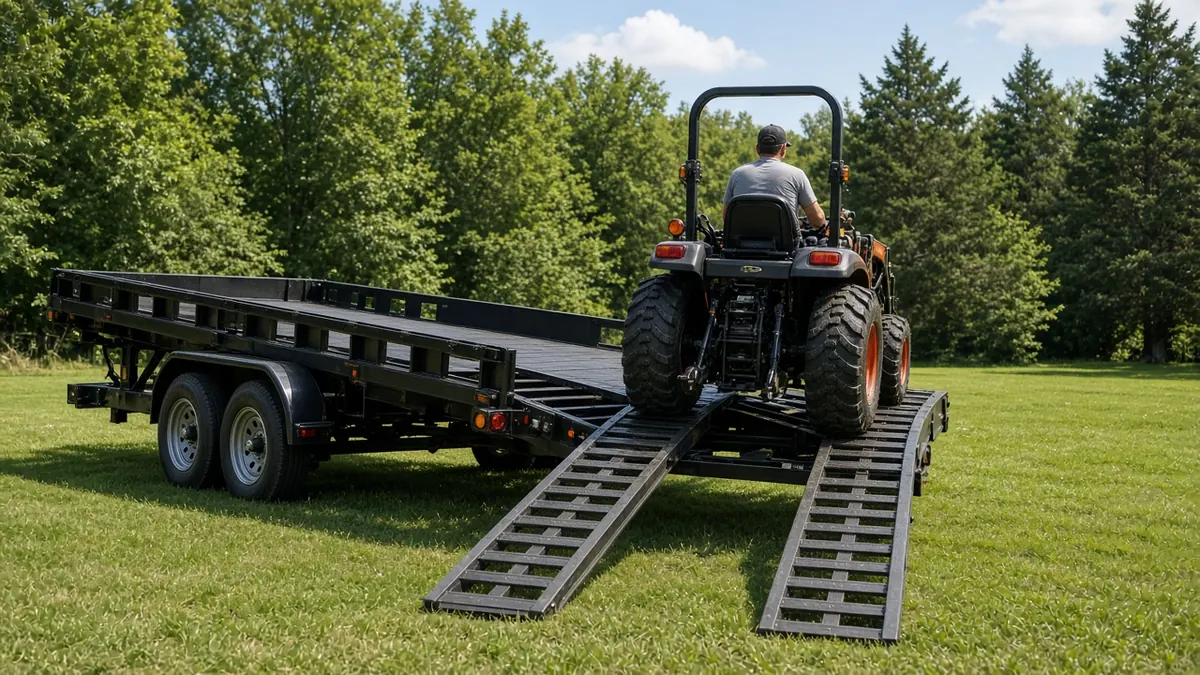
A dovetail is a section at the back of a trailer deck that slopes down toward the ground. Instead of being flat all the way to the end, the last couple of feet of deck angle downward.
That does two things:
It lowers the end of the deck, so the ramps don't have to climb as high.
It splits the climb into two smaller angles, from the ground to the dovetail and from the dovetail to the flat deck, instead of one steep ramp.
Our 24 ft flatbed has ramps plus a 2 ft dovetail, which is a big help when loading skid steers, mowers, and other equipment.
Ramp length matters too
The longer the ramp, the gentler the angle for the same deck height. If your equipment is scraping:
Use longer ramps if available
Load on level ground, or back the trailer's rear wheels slightly downhill to drop the end of the deck a bit (only if the ground is firm and the truck is secure)
Avoid loading with the trailer's back end up on a curb or hump
Types of ramps
Slide-in or stand-up ramps on flatbeds and equipment trailers. These are separate ramps that you set into position and pin or hook in place. Space them to match your machine's wheel or track width.
Ramp gates on landscape and utility trailers. The whole rear gate folds down into a ramp. Our 18 ft landscape trailer has a rear ramp gate, which makes rolling mowers and yard equipment on and off quick.
Loading ramps for pickups and small trailers. These portable ramps hook onto a tailgate or deck edge. Always check the weight rating and use the safety straps.
Safe loading tips
Hitch the trailer first. Weight on the back of an unhitched trailer can tip the tongue up.
Check that ramps are seated and pinned before you put any weight on them.
Line up straight. Make corrections before you're on the ramp, not halfway up.
Go slow and steady. Don't stop halfway, and don't gun it at the top.
Watch the transition. The spot where the ramp meets the deck (or dovetail) is where high-centering happens. Take it gently.
Clean and dry ramps. Mud, grass clippings, and rain make ramps slick.
Never stand behind or beside the ramps while a machine is loading.
For heavy equipment, remember to keep the heavy end uphill. Our skid steer guide explains this in detail.
Secure the ramps before you drive
This is easy to forget. Before you pull away:
Ramp gates should be raised and latched or pinned
Slide-in ramps should be stowed and locked in their brackets
Nothing should be able to bounce loose or drag on the road
An unsecured ramp can fall onto the road and become a dangerous hazard for the drivers behind you. It's on our Towing Safety page for a reason.
Matching ramps to the job
Push mowers and small equipment: a ramp gate on a landscape trailer is usually perfect
Zero-turns and lawn tractors: look for a gentle angle; a longer gate helps
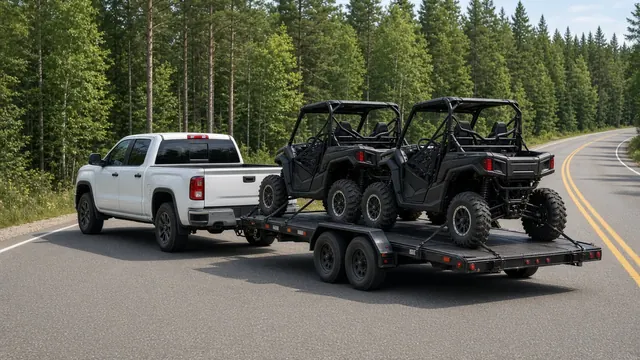
ATVs and side-by-sides: wide enough ramps for the track width, with good traction
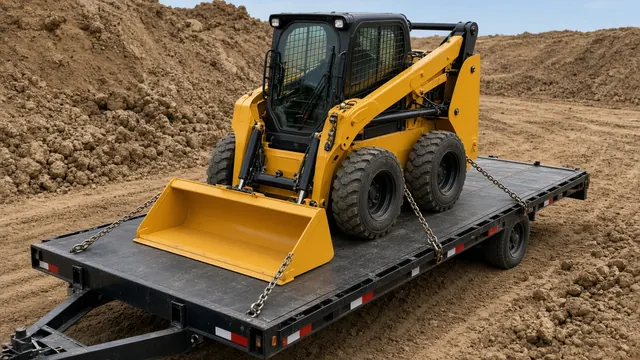
Skid steers and heavier machines: strong ramps rated for the weight, plus a dovetail
Not sure which setup fits your equipment? Check our Which Trailer Do I Need? guide, or send us a message with what you're hauling.