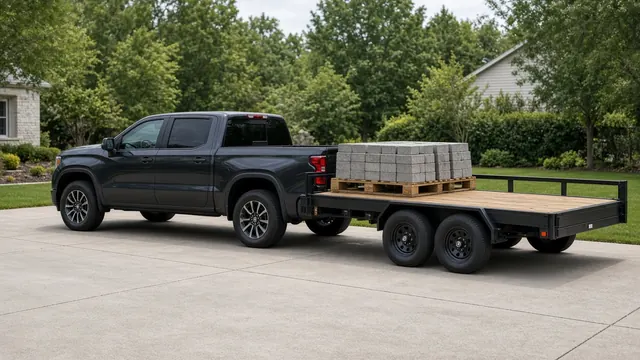
Tongue Weight Made Simple: How to Load a Trailer So It Tows Straight
What tongue weight is, why about 10-15% of trailer weight should sit on the hitch, and how to place your load so the trailer tows straight.
Read more →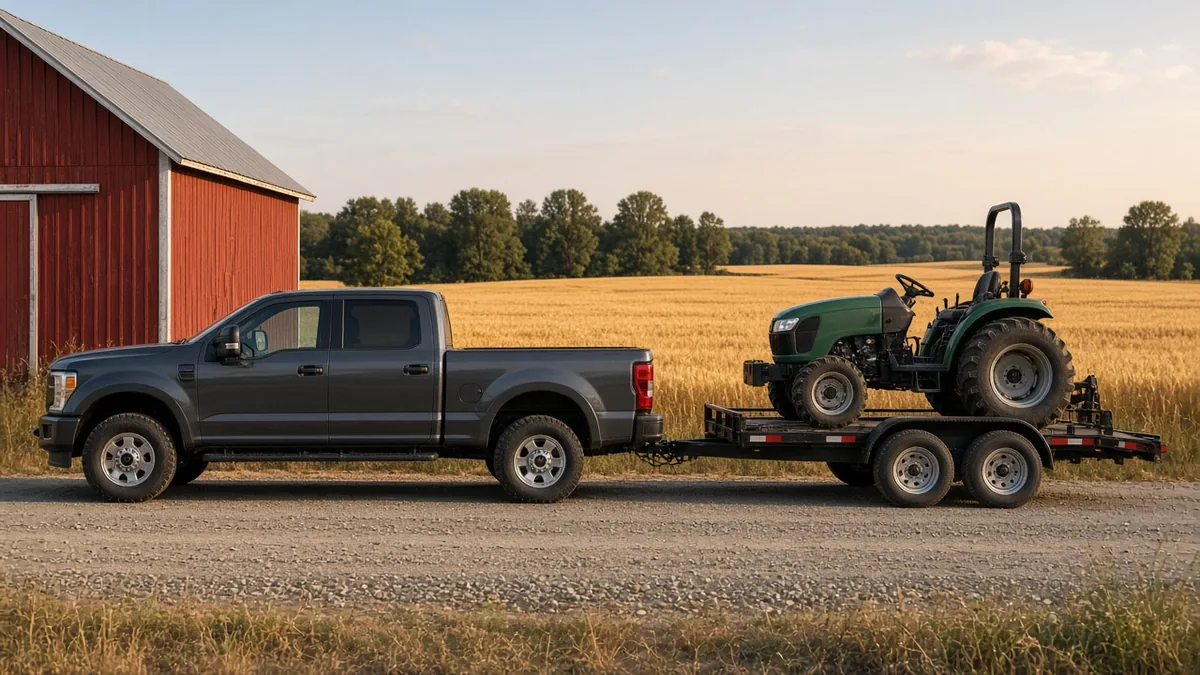
"Can my truck pull that?" It's one of the most common towing questions, and the answer is often more complicated than the big number in the truck commercial. Towing capacity is only one of several limits. Here's how to make sense of them all.
You'll find most of these on the sticker in your driver's door jamb or in your owner's manual.
Many people check the towing capacity, see a big number, and stop there. But you can run out of payload long before you hit towing capacity.
Here's why: tongue weight counts against your payload. So does everyone in the cab, the toolbox in the bed, the cooler, and the dog. A truck with a 9,000-pound towing capacity might only have 1,500 pounds of payload. Put 800 pounds of tongue weight on the hitch, add four adults and some gear, and you might be over.
Let's say you want to haul a skid steer on a flatbed.
Step 1: Find the loaded trailer weight. - Trailer empty weight: 2,500 lb (example) - Skid steer: 6,000 lb (check your machine's spec sheet) - Chains, binders, and buckets: 200 lb - Loaded trailer: 8,700 lb
Is that under the trailer's GVWR? For a 10,000 lb GVWR trailer, yes.
Step 2: Check your towing capacity. Is 8,700 lb under your vehicle's towing capacity? If your truck is rated for 10,000 lb, yes. If it's rated for 7,500 lb, no, and you need a bigger truck or a lighter load.
Step 3: Check payload. - Tongue weight at about 12 percent: roughly 1,050 lb - Driver and passenger: 400 lb - Tools in the bed: 150 lb - Total: 1,600 lb
Is that under your truck's payload? Look at the door sticker. If it says 1,800 lb, you're OK. If it says 1,400 lb, you're over, even though the towing capacity looked fine.
Step 4: Check GCWR. Add your truck's loaded weight to the loaded trailer weight and compare it to the GCWR in your owner's manual.
Step 5: Check the hitch. Your receiver, ball mount, and ball each have a rating. The lowest one is your real limit. See our hitch basics guide.
Your vehicle also has a GAWR (Gross Axle Weight Rating) for the front and rear axles. Heavy tongue weight loads the rear axle. A weight distributing hitch can shift some of that weight forward, which helps keep the rear axle within its rating and your steering feeling normal.
Estimates are a good start, but the best answer comes from a scale. Many truck stops have certified scales that can weigh each axle. It costs a few dollars and takes a few minutes, and you'll know for sure.
Just because you're under every number doesn't mean you should run right at the limit. Hills, wind, heat, and emergency stops all put extra stress on your rig. Many experienced towers like to stay well under their maximums, especially on long trips.
Our 18 ft landscape trailer has a 7,000 lb GVWR, and our 24 ft flatbed has a 10,000 lb GVWR. Those numbers are the most each trailer can weigh with cargo. Your tow vehicle needs to handle the loaded weight, too. The 24 ft flatbed also needs a properly rated tow vehicle and a working brake controller.
Not sure your truck is up to it? Tell us what you're towing with and what you're hauling, and we'll help you figure it out. Our Which Trailer Do I Need? guide is a good place to start. Call or message for rates.
What tongue weight is, why about 10-15% of trailer weight should sit on the hitch, and how to place your load so the trailer tows straight.
Read more →A plain-English guide to trailer hitches covering ball sizes, receiver classes, drop and rise, ball mount ratings, and when a weight distributing hitch helps.
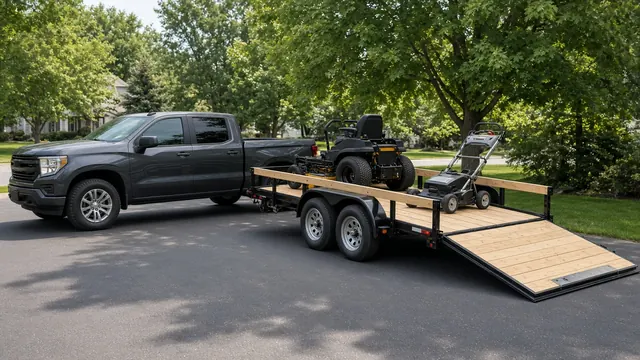
Read more →Picking a trailer for mowers, mulch, pavers, or a skid steer? A plain-English guide to deck length, GVWR, ramps, and tow vehicle fit for landscaping.
Read more →