The 10-Minute Pre-Trip Trailer Checklist
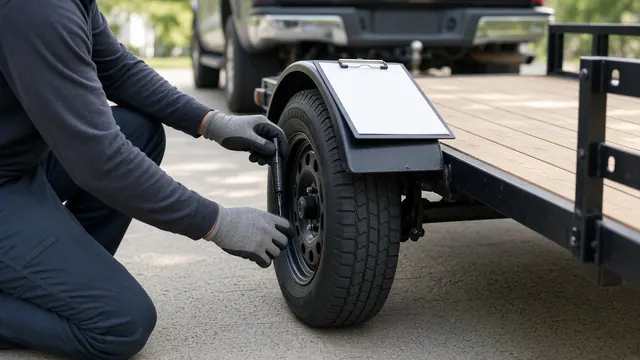
A 10-minute walk-around to run before every tow: hitch, safety chains, lights, tires, brakes, load, and ramps, so every trip starts safe.
Read more →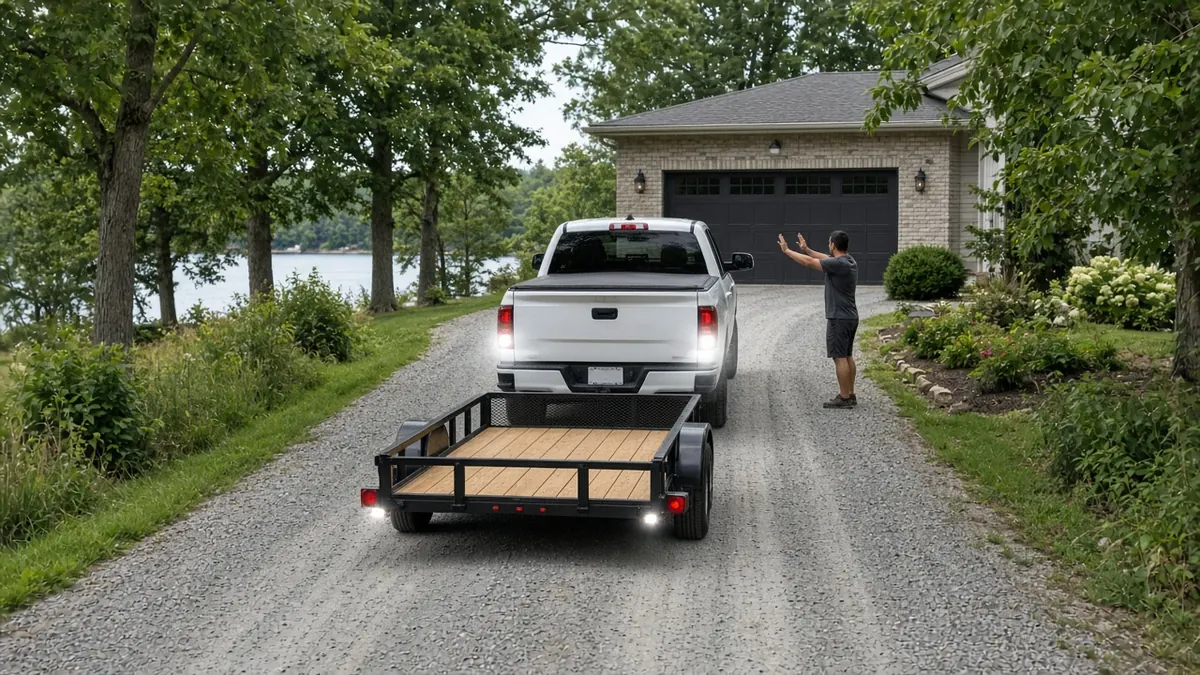
Labor Day weekend means a lot of trailers getting backed into driveways, campsites, and boat launches. If backing up a trailer makes you nervous, you're not alone. It's one of the most common things new towers struggle with. The good news: it's a skill, not a talent, and a few simple tricks make it much easier.
When you back up a trailer, the trailer turns the opposite direction from the back of your vehicle. Turn the steering wheel right, and the back of your truck goes right, which pushes the trailer's front right and swings the back of the trailer left.
That's why backing up feels so strange at first. Your brain wants to steer the trailer like a car, and the trailer does the opposite.
This is the single best tip for beginners:
Put one hand at the bottom of the steering wheel (6 o'clock). Move your hand in the direction you want the back of the trailer to go.
That's it. It takes the "backward" out of backing up.
1. Set yourself up. Before you start backing, pull forward so the truck and trailer are as straight as possible and lined up close to where you want to go. A good setup does most of the work.
2. Check your mirrors. Adjust both side mirrors so you can see down the sides of the trailer. Towing mirrors help a lot on wide trailers.
3. Get a spotter. A helper outside makes everything easier. Agree on hand signals ahead of time, and make sure the spotter stays where you can see them in your mirror. If you can't see your spotter, stop.
4. Go slow. Backing up should be done at a crawl. Use the brake to control your speed. Slow gives you time to think and correct.
5. Make small steering moves. Big turns of the wheel make the trailer swing fast. Small moves, then wait to see what happens.
6. Watch both mirrors. Glance back and forth. If the trailer appears more in one mirror, it's heading that way.
7. Straighten out early. To stop a trailer from turning more, you have to steer the other way a bit before it reaches the angle you want. Begin straightening sooner than feels natural.
8. Pull forward to fix it. If things get off track, don't fight it. Pull forward, straighten out, and try again. Even professional drivers do this all the time.
If the angle between the truck and trailer gets too sharp, they can jackknife. The trailer can hit your bumper or tailgate, and on some trucks it can damage the tailgate or the trailer tongue. If the angle is getting sharp, stop and pull forward to straighten out.
Truck drivers call it G.O.A.L.: Get Out And Look. If you're not sure what's behind you, stop, put it in park, and walk back to look. Check for posts, kids, pets, low branches, and soft ground. It takes thirty seconds and can save you a lot of trouble.
The best way to get comfortable is to practice somewhere empty, like a big parking lot on a Sunday morning.
A half hour of practice before your trip makes a world of difference.
It sounds backward, but longer trailers are usually easier to back up than short ones. A short trailer reacts quickly to steering, and it's easy to oversteer. A longer trailer like our 24 ft flatbed reacts more slowly, which gives you more time to correct. Your truck still needs room, though, so plan your path before you start.
Our Towing Safety page has a few more basics, and our pre-trip checklist is a good habit before any trip. Follow us on Facebook for a new towing tip every week.
A 10-minute walk-around to run before every tow: hitch, safety chains, lights, tires, brakes, load, and ramps, so every trip starts safe.
Read more →Trailer sway can turn scary fast. Learn the common causes, how to prevent it with good loading and setup, and exactly what to do if your trailer starts to sway.
Read more →Picking a trailer for mowers, mulch, pavers, or a skid steer? A plain-English guide to deck length, GVWR, ramps, and tow vehicle fit for landscaping.
Read more →