How to Haul ATVs and Side-by-Sides Up North Safely
Taking ATVs or a side-by-side up north? How to pick a trailer, load machines straight, strap them at the wheels, and handle a long drive.
Read more →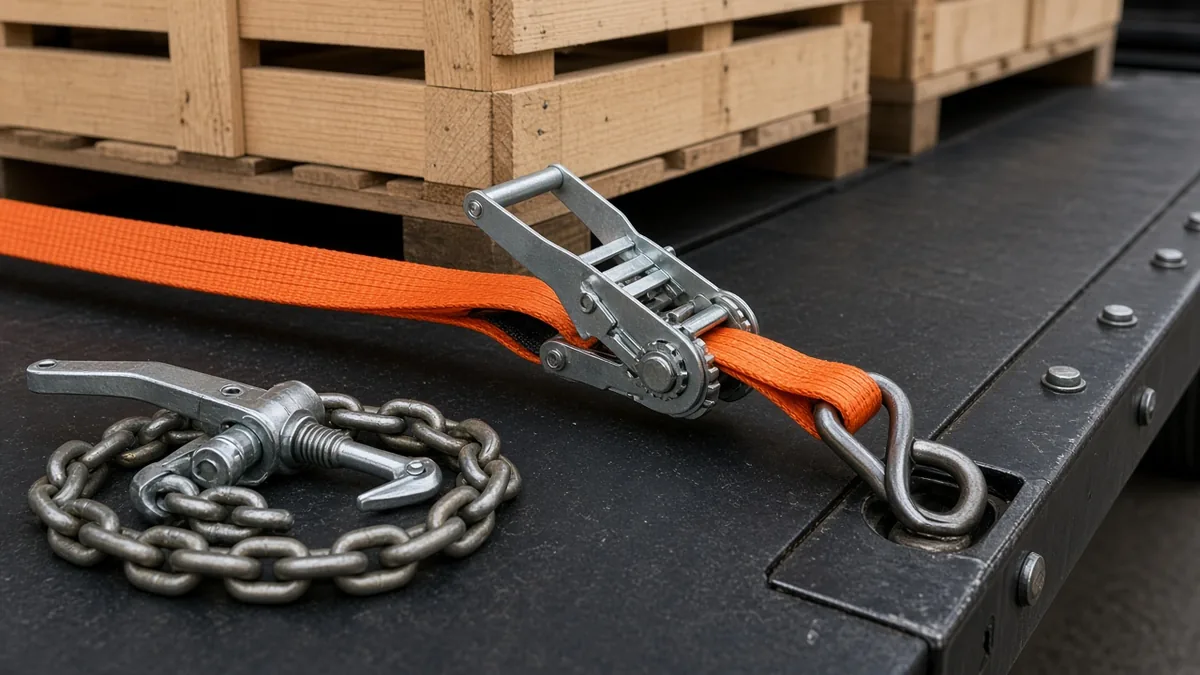
A trailer can have the best hitch, perfect tires, and a well-balanced load, and it all goes out the window if the cargo comes loose. Good tie-downs are cheap insurance. Here's what you need to know to pick the right ones and use them properly.
This is the most important thing to understand about straps and chains, and it's where most people get confused.
Always go by the working load limit. A strap labeled "3,000 lb" on the front of the package may only have a WLL of 1,000 pounds. Look for the WLL on the strap's tag. If a strap has no tag, don't trust it with a heavy load.
A good rule of thumb comes from the federal cargo securement rules for commercial trucks: the combined working load limit of all your tie-downs should be at least half the weight of the cargo. Those rules are written for commercial carriers, but the idea is a smart one for anyone.
For example, if you're hauling a 2,000-pound machine, the WLL of all your tie-downs together should add up to at least 1,000 pounds. Using four straps with a 500-pound WLL each gives you 2,000 pounds total, which covers it with room to spare.
For anything with wheels, use at least four tie-downs, one at each corner. Pull them in opposite directions: the front straps pull forward and out, the rear straps pull back and out. That keeps the load from sliding forward under braking, backward when you accelerate, and side to side in turns.
Heavy or long items may need more. If something could roll, also put the machine in gear or park, set its brake, and consider chocking the wheels.
Ratchet straps are great for most loads: mowers, ATVs, side-by-sides, lawn tractors, and materials. They're easy to use, won't scratch paint as much, and come in a range of ratings.
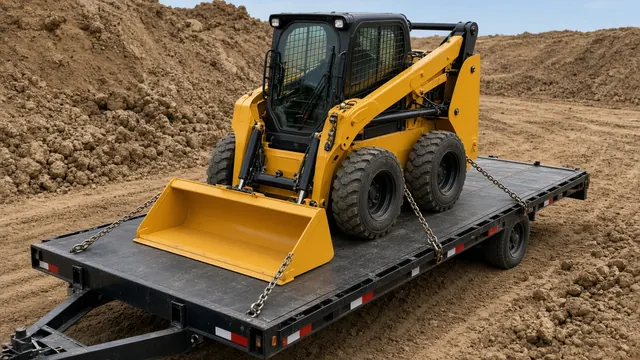
Chains and binders are the usual choice for heavy equipment like skid steers and compact track loaders. They're tougher, handle sharp edges better, and don't stretch. Use chain rated for the job (look for a grade stamp on the links) and binders rated to match. Our skid steer guide covers chaining in more detail.
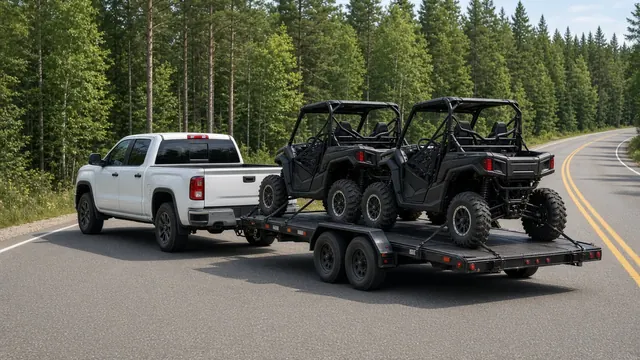
Wheel nets (tire bonnets) are made for machines with soft suspension, like side-by-sides. They hold the tire down so the suspension can move without loosening the straps. That's how the side-by-sides in our In Action photos were secured.
Throw out straps with:
Store straps out of the sun and rolled up neatly. They'll last longer and be easier to use next time.
Tighten straps until the load is snug and doesn't move when you push on it, but don't crank so hard that you damage the cargo. Tie down loose strap ends so they can't flap in the wind and fray.
Then recheck after the first few miles. Loads settle as the trailer bounces, and straps that were tight in the driveway can loosen up. Check again at every stop.
Both of our rental trailers have room for proper tie-downs. See the Rental Fleet page, and follow us on Facebook for more towing tips.
Taking ATVs or a side-by-side up north? How to pick a trailer, load machines straight, strap them at the wheels, and handle a long drive.
Read more →How to haul a skid steer or compact track loader: trailer size, weight, loading safely on ramps, where to position it, and chaining it down.
Read more →A 10-minute walk-around to run before every tow: hitch, safety chains, lights, tires, brakes, load, and ramps, so every trip starts safe.
Read more →