Tie-Downs 101: Ratchet Straps, Chains, and Working Load Limits
Working load limit vs break strength, how many tie-downs you need, when to use straps or chains, and how to keep cargo from shifting.
Read more →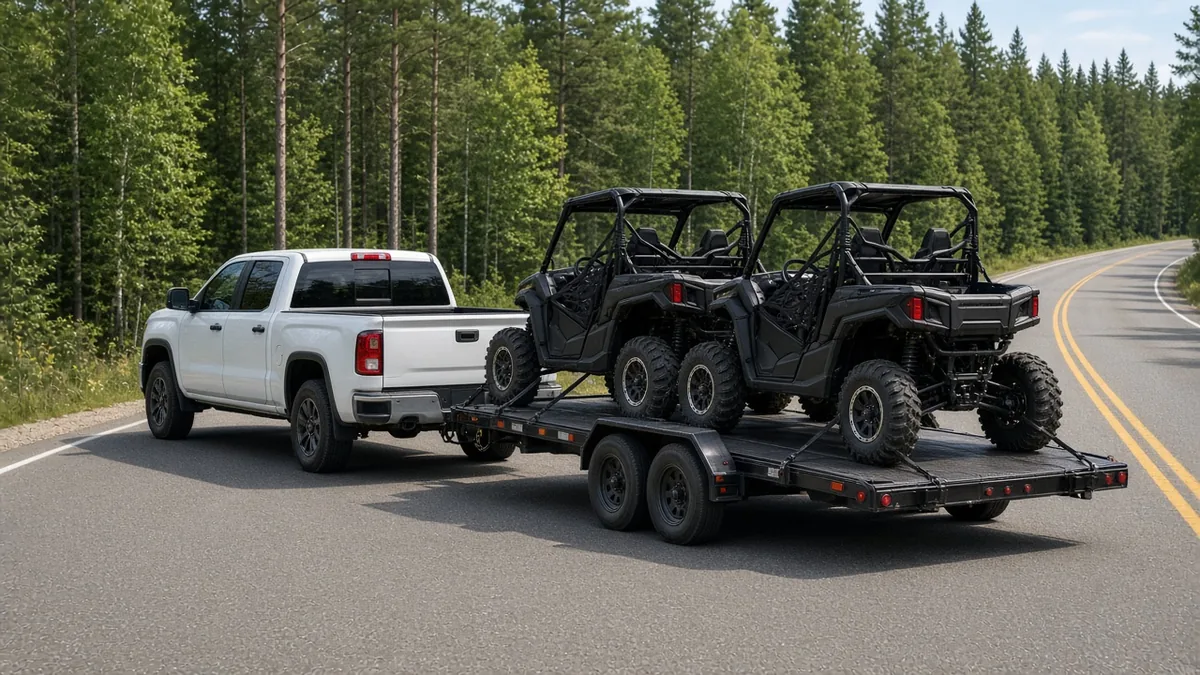
Summer in Michigan means trail riding. Whether you're headed to the trails up north or across the Mackinac Bridge into the U.P., getting your ATVs or side-by-sides there safely starts with the trailer. Here's how to do it right.
Start by measuring. Side-by-sides are longer and wider than most people expect. Write down the length and width of each machine, plus the weight from the owner's manual. Most side-by-sides weigh well over 1,000 pounds before you add gear and fuel.
Our In Action photos show our 18 ft landscape trailer carrying two ATVs and a side-by-side, and our 24 ft flatbed carrying two side-by-sides. If you're not sure which fits, our Which Trailer Do I Need? guide compares them.
Don't forget the weight. Add up the machines, a full tank of fuel, coolers, and gear, plus the trailer itself. That total needs to fit under both the trailer's GVWR and your tow vehicle's towing capacity. Our towing capacity guide shows how.
Loading is where most mishaps happen. A few tips:
Some riders prefer to winch machines on, which is fine too. Just take your time.
With two machines, the heavier one usually goes in front. Aim to get about 60 percent of the weight ahead of the trailer axles. Put machines in gear or park and set their parking brakes. Our guide to tongue weight explains why this matters so much.
This is the big one. Side-by-sides have soft suspensions, so if you strap them down through the body or the roll cage, the machine can bounce, and straps can loosen or break.
The better way is to secure the machine at the tires or the frame, so the suspension isn't fighting your straps:
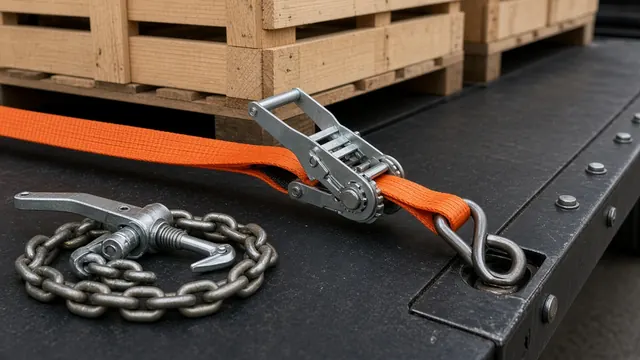
The two side-by-sides in our Mackinac Bridge photo were held down at the wheels with wheel nets and ratchet straps. For more on strap ratings, see our tie-downs guide.
Remove or secure anything that can blow off: helmets, coolers, bags, and windshields that aren't rated for highway speed. Many manufacturers recommend taking off soft roofs or folding windshields for towing. Keep fuel caps tight and carry extra fuel in approved containers, secured upright.
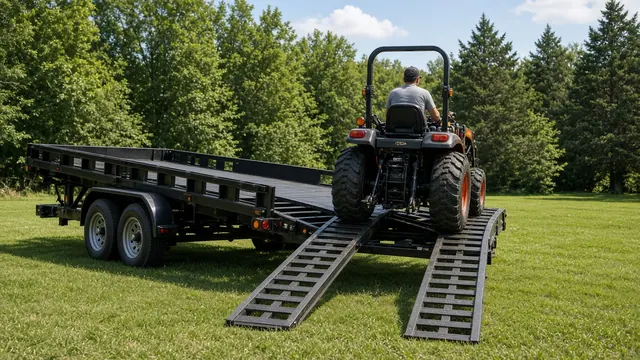
Reverse the process: level ground, trailer hitched, spotter to the side. Remove the straps last, after you've checked that the machine is in gear with the parking brake set. Back down the ramps slowly in low gear.
A few extra minutes at loading time means you spend your weekend on the trail instead of the shoulder. Follow us on Facebook for more towing tips, and check out the Rental Fleet page if you need a trailer for your next trip up north. Call or message for rates.
Working load limit vs break strength, how many tie-downs you need, when to use straps or chains, and how to keep cargo from shifting.
Read more →What a trailer dovetail is, how ramp length changes your loading angle, and how to load low mowers, side-by-sides, and equipment without scraping or slipping.
Read more →What tongue weight is, why about 10-15% of trailer weight should sit on the hitch, and how to place your load so the trailer tows straight.
Read more →