Ramps and Dovetails: Why Loading Angle Matters
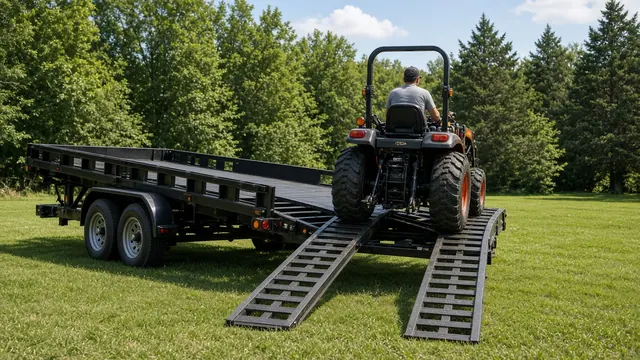
What a trailer dovetail is, how ramp length changes your loading angle, and how to load low mowers, side-by-sides, and equipment without scraping or slipping.
Read more →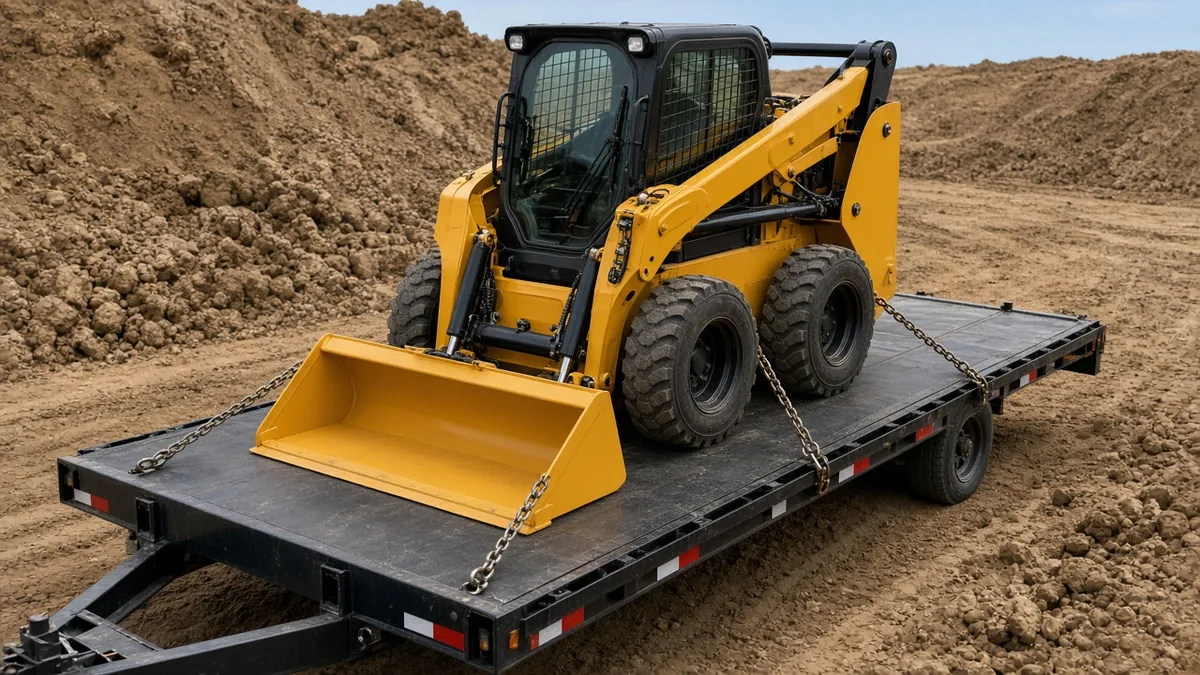
A skid steer is one of the most useful machines on a job site, and one of the heaviest things most people will ever put on a trailer. Moving one safely takes the right trailer, a careful approach to loading, and solid tie-downs. Here's how to do it.
Skid steers and compact track loaders are heavy. Smaller models can weigh around 5,000 pounds, and larger ones can weigh much more. Add a bucket or attachment, and the number goes up again.
Find the operating weight on the machine's spec sheet or plate. Then add:
Add that to the trailer's empty weight. The total must stay under the trailer's GVWR and your truck's towing capacity. Our towing capacity and payload guide walks through the math step by step.
For most skid steers, you want a heavy-duty equipment trailer or flatbed with:
Our 24 ft flatbed is rated at 10,000 lb GVWR and has ramps plus a 2 ft dovetail for this kind of work. It needs a properly rated tow vehicle and a working brake controller. Always check that your specific machine's weight fits. Our Which Trailer Do I Need? guide can help.
This is the rule to remember: drive up with the heavy end uphill.
Always follow your machine's operator's manual, since some models have specific guidance. Keep the bucket or attachment low, just above the ramps. Move slowly and steadily. Don't turn while on the ramps.
Once on the trailer, position the machine so about 60 percent of the total cargo weight is ahead of the trailer axles. That gives you good tongue weight and helps prevent sway. Our tongue weight guide explains why.
Then:
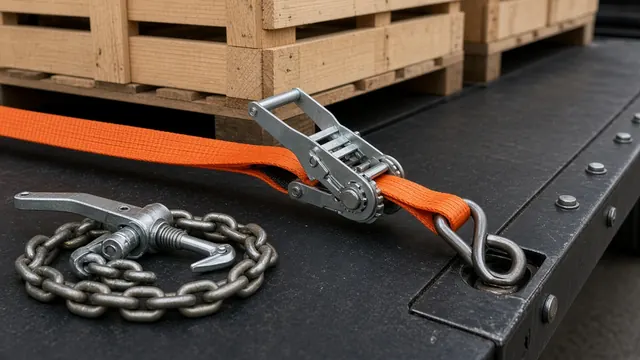
Heavy equipment calls for chains and binders, not just straps.
Our tie-downs guide explains working load limits in detail.
Reverse the steps: level ground, trailer hitched, chocks in place. Remove the chains last, after the machine is running and ready. Come down the ramps with the heavy end uphill, slowly, with the bucket low.
Hauling a skid steer isn't hard, but it does reward patience. Take your time, and the machine will arrive ready to work. Call or message for rates on our 24 ft flatbed.
What a trailer dovetail is, how ramp length changes your loading angle, and how to load low mowers, side-by-sides, and equipment without scraping or slipping.
Read more →Working load limit vs break strength, how many tie-downs you need, when to use straps or chains, and how to keep cargo from shifting.
Read more →GVWR, GCWR, payload, towing capacity, and tongue weight in plain English, with a step-by-step example to see if your truck can tow your load.
Read more →