Trailer Sway: What Causes It and How to Stop It
Trailer sway can turn scary fast. Learn the common causes, how to prevent it with good loading and setup, and exactly what to do if your trailer starts to sway.
Read more →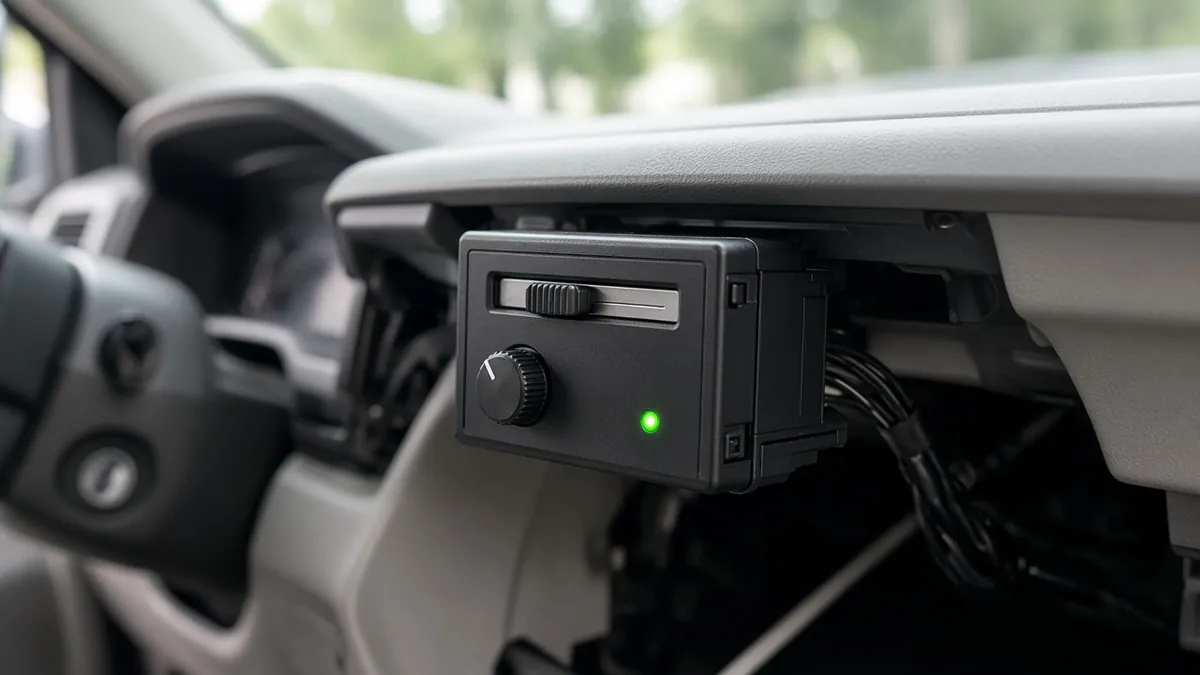
Stopping a heavy trailer takes more than your truck's brakes. That's why many trailers have their own brakes, and why you need a brake controller to run them. If the terms sound confusing, here's the plain-English version.
Your truck's brakes are designed to stop your truck, plus some extra margin. A loaded trailer can weigh as much as your truck or more. Without trailer brakes, all that weight pushes on your vehicle when you stop, making stopping distances longer and wearing out your brakes fast. It can also make the trailer push the back of your vehicle sideways on a slippery road.
Trailer brakes let the trailer do its share of the stopping.
This article focuses on electric brakes, since they're what most people run into.
A brake controller is a small unit mounted in your vehicle, usually under the dash. When you press the brake pedal, it sends power to the trailer brakes through the 7-way plug. Many newer trucks have a controller built into the dash.
There are two main kinds:
Both kinds have a manual lever or button that lets you apply only the trailer brakes. That's important for stopping trailer sway.
The gain is how much power the controller sends to the trailer brakes. Too low, and the trailer pushes your vehicle. Too high, and the trailer wheels can lock up.
A common way to set it (always check your controller's manual):
Set the gain again whenever the load changes a lot. An empty trailer needs less gain than a fully loaded one.
Trailers with electric brakes usually have a breakaway kit: a small battery on the trailer and a switch with a cable.
The cable attaches to your tow vehicle, not to the safety chains. If the trailer ever separates from your vehicle, the cable pulls a pin out of the switch, and the battery applies the trailer brakes on its own. That keeps a runaway trailer from rolling down the road.
Before each trip:
Michigan's vehicle code has brake rules for trailers, including when trailers must have brakes. They depend on the trailer's weight and when it was sold. Our Michigan towing laws article covers what we verified, with links to the official text.
Our 24 ft flatbed is rated at 10,000 lb GVWR, and it needs a properly rated tow vehicle and a working brake controller. If you're not sure whether your truck has one, check the dash or under it, or send us a message before pickup. Our Which Trailer Do I Need? guide explains the requirements for each trailer.
Follow us on Facebook for a new towing tip every week.
Trailer sway can turn scary fast. Learn the common causes, how to prevent it with good loading and setup, and exactly what to do if your trailer starts to sway.
Read more →Trailer lights out or flickering? Most problems are a bad ground, a dirty plug, a fuse, or a bulb. A step-by-step guide anyone can follow.
Read more →What Michigan law says about towing a trailer: safety chains, towing more than one trailer, trailer brakes, and speed limits, with links to the law.
Read more →