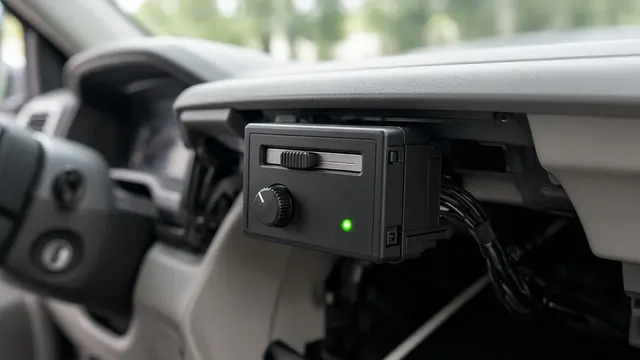
Trailer Brakes and Brake Controllers in Plain English
How electric trailer brakes and brake controllers work, proportional vs time-delayed controllers, setting the gain, and what a breakaway kit does.
Read more →
Towing rules are different from state to state, so it's worth knowing what Michigan's law actually says. We read the official text of the Michigan Vehicle Code for a few of the rules that come up most often when towing a utility, landscape, or equipment trailer. Here's a plain-English summary, with links to the source so you can read it for yourself.
Please note: this is a general summary, not legal advice. Laws change, and some rules have exceptions we don't cover here. Always check the current law at the Michigan Legislature website, linked below.
Michigan law says a trailer must be connected to the towing vehicle with suitable safety chains or devices, one on each side of the coupling, attached at the outer edge of the trailer. Each chain and its connection must be strong enough to haul the loaded trailer.
In practice, that means:
Source: MCL 257.721, Michigan Legislature
The same section says the coupling must keep the trailer tracking closely behind the tow vehicle. On a level, smooth, paved road, the trailer can't wander more than 3 inches to either side of the tow vehicle's path.
A worn coupler, a loose ball, or a badly loaded trailer can cause wandering and sway. Our guides to hitch basics and trailer sway can help.
Source: MCL 257.721
Under the same law, a passenger vehicle or pickup truck can't tow more than one trailer on a Michigan highway. There's a narrow exception for certain pickups with a fifth-wheel hitch pulling a fifth-wheel camper plus one more trailer, with extra conditions on length and weight. For most people towing a utility or equipment trailer, the rule is simple: one trailer.
The law also says the drawbar or connection between the two vehicles can't be longer than 15 feet. Violating this section is a civil infraction.
Source: MCL 257.721
Michigan's brake law is detailed, and the rules depend on weight and when the trailer was sold. A few key points from the text:
The full section has more detail and exceptions, so read it if you're buying or building a trailer. Our guide to trailer brakes and brake controllers explains how the equipment works.
Source: MCL 257.705, Michigan Legislature
Michigan's speed limit law sets a 65 mph limit on freeways and state trunk line highways posted higher than 65 for school buses, trucks with a gross weight of 10,000 pounds or more, and truck-tractors with trailers. The law doesn't set a separate towing speed for an ordinary passenger car pulling a trailer, so in that case the posted limit applies. If you drive a heavier truck, read the section to see how it applies to you.
The same law also has a "basic speed law": you must always drive at a careful, reasonable speed for the traffic, road, and conditions, and be able to stop within the clear distance ahead. With a heavy trailer behind you, that often means driving slower than the posted limit, especially in wind, rain, or snow.
Source: MCL 257.627, Michigan Legislature
The law sets the minimum. Safe towing goes further:
Our 24 ft flatbed has a 10,000 lb GVWR and needs a properly rated tow vehicle and a working brake controller. Our 18 ft landscape trailer has a 7,000 lb GVWR. Have questions about what your truck can tow? Check our Which Trailer Do I Need? guide or send us a message.
Sources checked on the Michigan Legislature website in October 2026. Follow us on Facebook for more towing tips.
How electric trailer brakes and brake controllers work, proportional vs time-delayed controllers, setting the gain, and what a breakaway kit does.
Read more →A plain-English guide to trailer hitches covering ball sizes, receiver classes, drop and rise, ball mount ratings, and when a weight distributing hitch helps.
Read more →A 10-minute walk-around to run before every tow: hitch, safety chains, lights, tires, brakes, load, and ramps, so every trip starts safe.
Read more →