Ramps and Dovetails: Why Loading Angle Matters
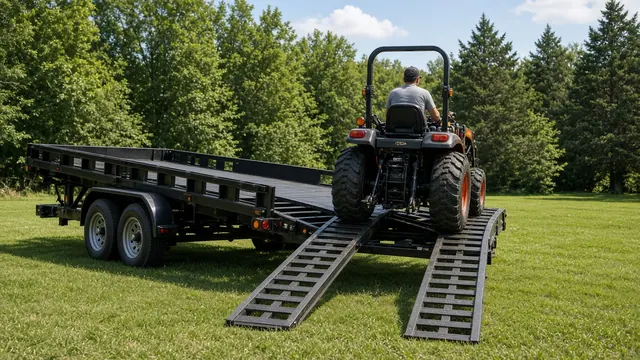
What a trailer dovetail is, how ramp length changes your loading angle, and how to load low mowers, side-by-sides, and equipment without scraping or slipping.
Read more →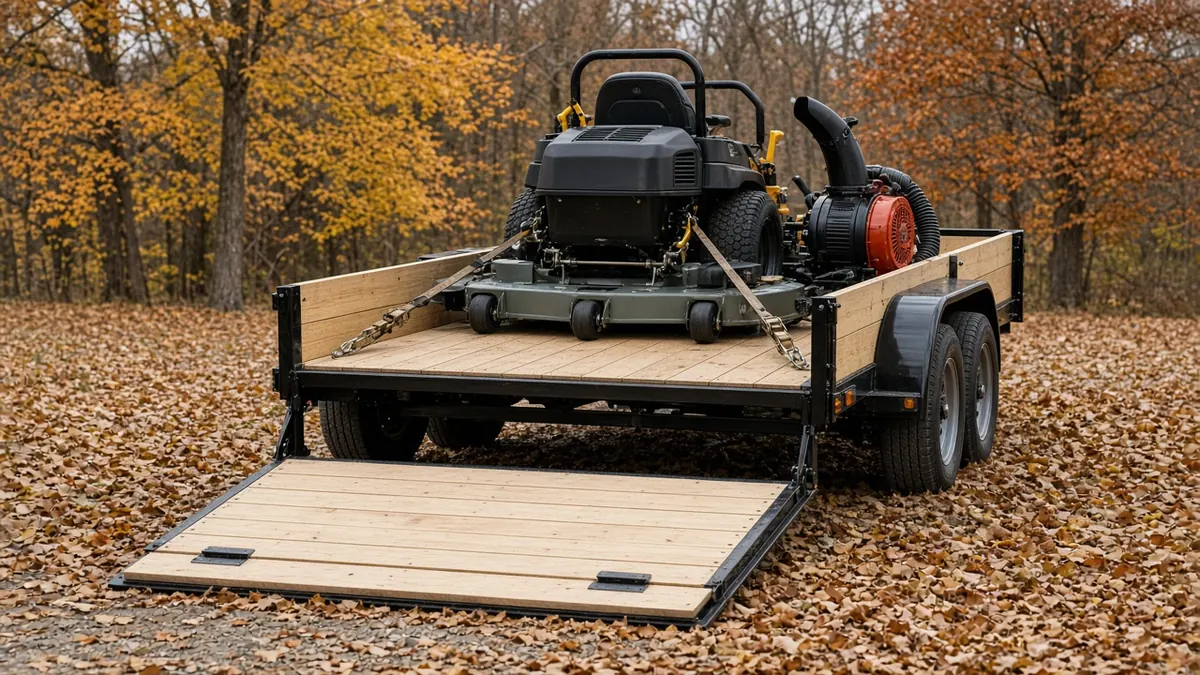
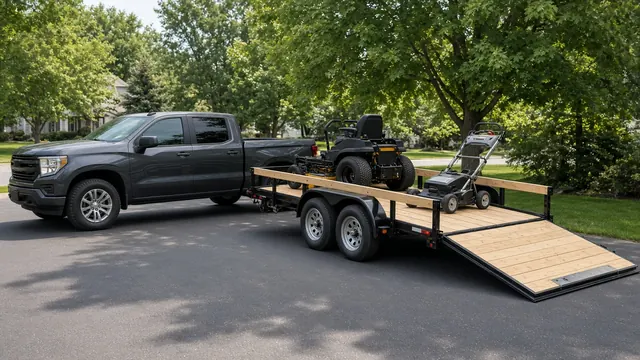
As the mowing season winds down in Michigan, a lot of equipment starts moving. Mowers head to the shop for a tune-up, tractors go into storage, and seasonal gear gets swapped out for snow equipment. Whether you're a homeowner with one lawn tractor or a crew moving a whole fleet, here's how to haul it all safely.
Before you load anything, list what's going on the trailer and how much it weighs. Owner's manuals and manufacturer websites list machine weights.
Add it up with the trailer's empty weight and check it against the trailer's GVWR. Our guide to towing capacity and payload shows how.
Our 18 ft landscape trailer is made for this kind of job, with a 7,000 lb GVWR and a rear ramp gate for rolling equipment on and off.
Zero-turns and lawn tractors often have very little clearance under the mower deck. On a steep ramp, the deck can catch at the top or bottom.
Our article on ramps and dovetails explains why a lower loading angle helps.
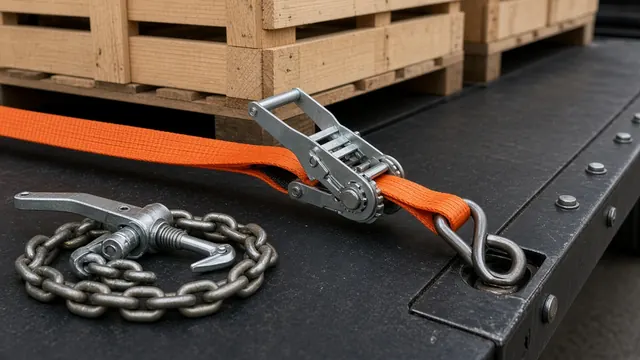
Mowers are often strapped down poorly because they seem small. But a loose mower can slide, tip, or bounce off a trailer.
Learn more about strap ratings in our tie-downs guide.
After the season, take a few minutes to look over the trailer, too:
Moving equipment this fall? See our Rental Fleet or the Which Trailer Do I Need? guide. Call or message for rates.
What a trailer dovetail is, how ramp length changes your loading angle, and how to load low mowers, side-by-sides, and equipment without scraping or slipping.
Read more →Working load limit vs break strength, how many tie-downs you need, when to use straps or chains, and how to keep cargo from shifting.
Read more →Picking a trailer for mowers, mulch, pavers, or a skid steer? A plain-English guide to deck length, GVWR, ramps, and tow vehicle fit for landscaping.
Read more →